That confusion matters. Picking the wrong equipment configuration affects your removal depth, surface finish, production rate, and how often you're replacing worn tooling instead of billing hours.
This article breaks down what separates a grinder from a planer, where milling drums fit into that equation, and how to decide between a conventional carbide-pick setup or an alternative drum system like Rolling Wedge for your next job.
Key Takeaways
- Treat "asphalt grinder" as informal shorthand; specify a cold planer when you need a defined drum machine
- Choose equipment by material type, cut depth, and site access—not by the name on the machine
- Evaluate the milling drum apart from the machine; drum design drives cut quality and productivity
- Use Rolling Wedge's rolling-wedging-lifting drum as a tooling option for compatible equipment, not a full machine swap
Asphalt Grinder vs Cold Planer: Quick Comparison
Here's the short version before we go deeper:
| Factor | Asphalt Grinder | Cold Planer |
|---|---|---|
| Category | Attachment or compact machine, varies by brand | Defined machine class with rotating drum |
| Primary job | Surface correction, patching, smaller removal | Controlled-depth pavement milling |
| Depth/width | Depends on attachment and carrier | Consistent, drum-controlled |
| Material fit | Varies by tooling and drum | Asphalt standard; concrete with right setup |
| Best for | Confined sites, short passes | High-volume roadway production |
Machine Category and Primary Job
"Asphalt grinder" isn't standardized. It might describe a pavement-grinding machine, a skid-steer-mounted planer attachment, or a whole equipment class.
A cold planer has a formal definition. The Association of Equipment Manufacturers describes a self-propelled cold planer as a wheeled or tracked machine that removes pavement to a preset depth, grade, and slope using a rotating, tool-equipped drum (AEM Product Definitions, 2024). That definition covers a machine class, not every planer attachment on the market.
Depth, Width, and Operating Considerations
Grinder specs vary wildly by attachment, drum, and carrier machine. Cold planer specs are more predictable because depth-control systems and drum width are engineered into the machine itself. When comparing equipment, look past the label:
- What's the carrier machine's power output?
- What's the actual drum width and maximum depth rating?
- Can the tooling handle the material you're cutting?
- What's the water or dust-management setup?
Don't judge performance from a machine name. Compare the whole system: carrier, attachment, drum, tooling, and controls together.
What Is an Asphalt Grinder?
An "asphalt grinder" usually refers to one of three things: a dedicated grinding machine, a skid-steer-mounted milling attachment, or a general category of smaller pavement-removal equipment. There's no single standardized machine behind the term.
Grinding and milling get used interchangeably in the field, though grinding leans toward surface correction or texture work while milling implies removing a controlled layer to a specified depth. Industry usage overlaps enough that you shouldn't assume one term guarantees a particular capability.
What to Evaluate
Before renting or buying, check these components:
- Carrier machine — skid steer, compact track loader, or dedicated unit
- Drum diameter and width — determines cut profile
- Cutting tools — carbide picks, alternative tooling, tooth spacing
- Depth control — hydraulic side-shift, manual adjustment, or automated
- Discharge system — how milled material exits the cutting chamber
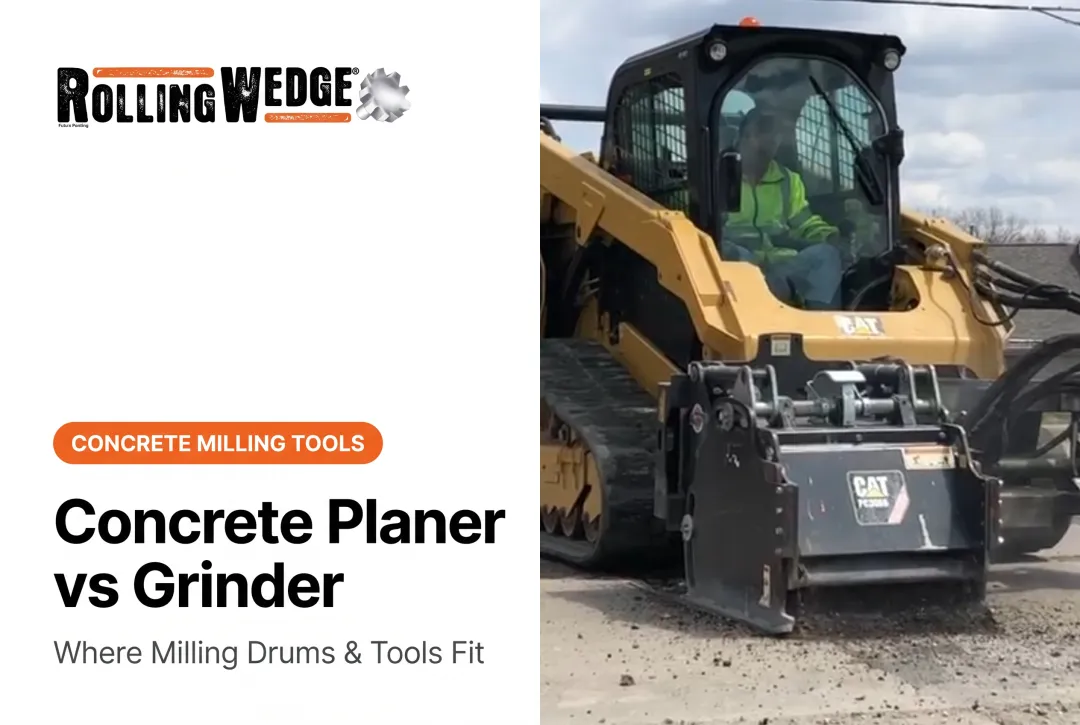
Caterpillar's own skid-steer cold planer line illustrates the spread. Its 2020 attachment brochure lists the PC104 at 14 inches cutting width with a 6-inch maximum depth. The larger PC310 XD reaches 39 inches wide with a 9-inch maximum depth (Caterpillar, 2020). Same product family, very different jobs.

Use Cases of an Asphalt Grinder
Smaller grinder configurations fit specific scenarios well:
- Patch preparation and localized pavement repairs
- Utility cuts and trench work
- Parking lots, shoulders, and narrow work zones
- Surface corrections before spot repaving
A compact grinder attachment makes sense when access is tight, passes are short, or you need one carrier machine handling multiple attachments across a job. If your work involves concrete or mixed materials, verify rebar-handling claims against manufacturer documentation before assuming any attachment can cut through reinforcement.
What Is a Cold Planer?
A cold planer removes pavement mechanically using a rotating drum, with the operator controlling milling width and depth throughout the pass. The Federal Highway Administration describes this process, cold milling, as pavement removal using a rotating drum fitted with tungsten-carbide-tipped teeth (FHWA Pavement Recycling Guidelines, 1997).
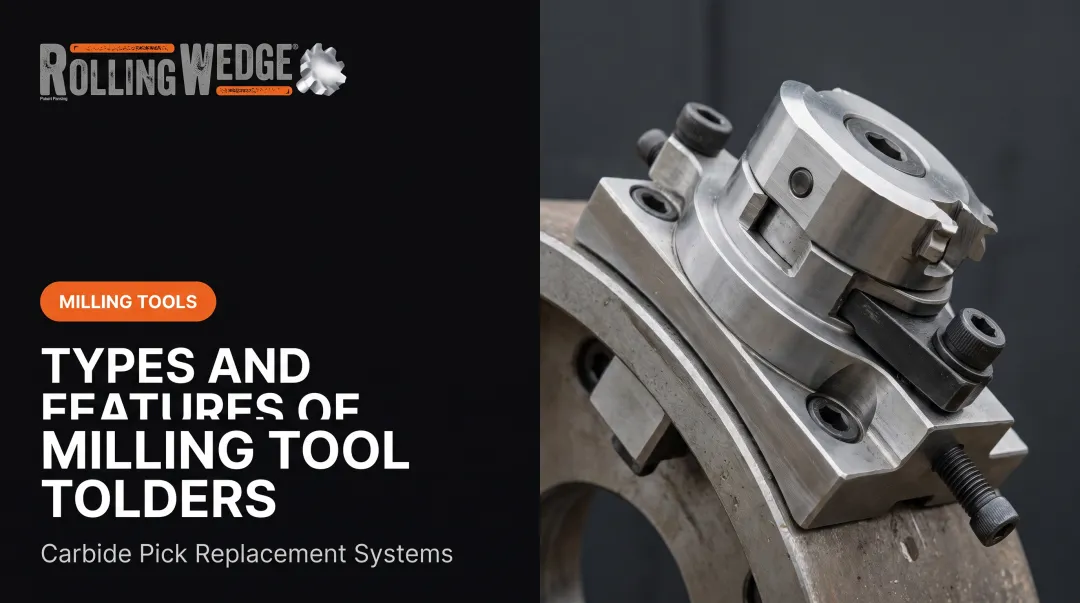
The full system works as a unit: drum, cutting tools, depth control, discharge conveyor, water system for dust and temperature control, and carrier power all have to run together for consistent output.
Configuration Types
- Skid-steer or compact attachments: smaller footprint, versatile carrier
- Half-lane or small self-propelled planers: mid-size production
- Large cold milling machines: full-lane, high-volume roadway work
Project scale should drive this decision. A half-mile municipal lot doesn't need the same machine as a ten-mile highway overlay.
Typical Cold Planer Workflow
The typical roadway sequence looks like this:
- Mill the existing surface to the specified depth and profile
- Manage the reclaimed material: load, haul, stockpile, or recycle
- Inspect and clean the milled profile before paving
- Place the replacement pavement

Municipalities run this sequence constantly. PennDOT's Route 220 work in Picture Rocks Borough paired ADA curb-ramp reconstruction with milling and resurfacing across roughly 5.6 miles (PennDOT, 2026).
That project shows milling inside a larger accessibility and overlay program. Drum tooling still drives results on concrete, mixed surfaces, or hard material, where tool-change downtime burns schedule. Rolling Wedge is a drum-system option for compatible skid-steer and large milling equipment—confirm carrier compatibility before you switch.
Asphalt Grinder vs Cold Planer: Which Is Better?
Neither label is automatically the right machine. Match the choice to cut depth, milling width, production volume, site access, material, and total operating cost.
Choose a grinder or compact attachment when:
- Work involves localized repairs or confined access
- Passes are short and material quantities are small
- You need one carrier handling multiple job types
Choose a larger cold planer when:
- The project requires consistent, controlled-depth removal
- Production volume justifies conveyor-based material handling
- You're feeding into a high-volume resurfacing schedule
Total Cost of Ownership Matters More Than Purchase Price
Those production choices only hold up if operating cost stays in check. Worn milling teeth cut less effectively and can raise fuel use, per For Construction Pros (2007). Build the full cost picture around:
- Tool replacement frequency and labor
- Installation/changeout time
- Fuel and water consumption
- Transport and setup
- Downtime and surface rework
Where Rolling Wedge Fits
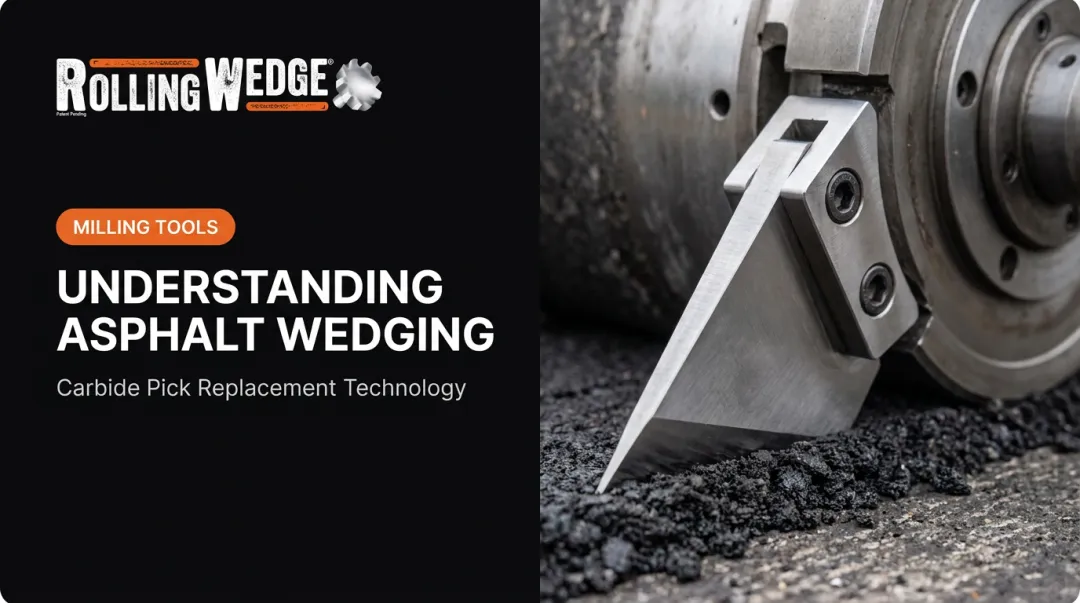
Tooling is often the hidden cost driver behind that list. Traditional carbide picks cut by impact, hammering into the surface. Rolling Wedge tools use a rolling-wedging-lifting action instead, placing material in tension, where its strength is roughly 20% of its compressive strength, rather than forcing it past compressive failure.
Each tool carries nine carbide teeth and rolls over and away from the surface instead of hammering it, so the cut runs smoother with less bounce. Internal data from Rolling Wedge shows:
- Tool replacement every 1-3 months versus twice weekly for carbide picks
- Full 24-inch drum changeout in about 20 minutes versus 1-2 hours
- Reported operating lives of 10x and longer than carbide picks in equivalent asphalt conditions
The tools upgrade existing rubber-tire and tracked Skidsteer planer attachments plus large road machines, including Roadtec and Caterpillar platforms such as the CAT 246D. Drum widths run 18, 24, 30, and 40 inches. If pick changes or rebar-heavy vibration are eating production hours, compare those figures to your current setup.

Real-World Example
A Minnesota contractor featured in Rolling Wedge's "Making the Cut" coverage switched to the rolling wedge drum system to cut frequent tool changes. The change reduced downtime that had been consuming billable milling hours on active jobs.
Selection Checklist
Before you lock in a grinder setup, conventional cold planer, or alternative drum system, run this checklist:
- Material: asphalt, concrete, or mixed?
- Required cut depth and width
- Carrier machine you already own
- Daily production target
- Site access constraints
- Debris and reclaimed-material handling
- Acceptable downtime window
Use Rolling Wedge's milling cost comparison tool to estimate whether the drum system fits your operation and equipment.
Conclusion
"Asphalt grinder" and "cold planer" overlap constantly in everyday conversation, but they can mean very different machine sizes, attachment types, and workflows depending on who's using the term. The label alone won't tell you what you need.
Match the complete system—carrier, drum, tooling, and controls—to your material, required cut profile, project scale, and access constraints. That's how you land on the right equipment, not by chasing a name.
Give drum and tooling the same scrutiny you give the machine. If tool longevity, downtime, or mixed-material capability are pain points on your current jobs, test Rolling Wedge against your baseline.
Frequently Asked Questions
How much does an asphalt grinder cost?
Price varies by machine size, attachment versus self-propelled configuration, drum width, and whether you're buying new or used. Compare total ownership cost, not just the sticker price.
How much does it cost to mill a road?
Project cost depends on roadway area, milling depth, material, traffic control, and hauling or recycling requirements. Get a project-specific quote rather than relying on general price ranges.
What machine do you use to mill asphalt?
Asphalt grinders (cold planers), self-propelled milling machines, and skid-steer planer attachments all mill asphalt. The right choice depends on required width, depth, production volume, and site access.
What is milling in road construction?
Milling is the controlled mechanical removal of an existing pavement layer, done to correct profile, prepare for an overlay, expose a repair area, or recover material for recycling.
Can you drive on a milled road?
Sometimes, depending on project conditions and active traffic control. The road agency or contractor determines when the milled surface is safe for traffic, so follow posted signage and instructions.
How deep can an asphalt milling machine cut?
Maximum depth depends on machine design and drum configuration. Compact attachments typically max out around 6–9 inches. Larger self-propelled planers can reach up to 14 inches in a single pass, per manufacturer specifications.