Introduction
Every resurfacing project lives or dies at the edge. A clean, well-supported pavement boundary lets an overlay bond properly. A ragged one invites water intrusion, cracking, and callbacks within a season or two.
Edge milling puts unique demands on a machine that full-width milling never sees. Operators must control a boundary line, protect adjacent surfaces, and hold a consistent profile — all while the drum and tools do the actual cutting.
Get the configuration wrong and you'll see it fast: uneven geometry, chewed-up tools, vibration, slower passes, and rework that eats into margin.
The Federal Highway Administration has linked poor longitudinal joint construction directly to premature cracking and early pavement failure (FHWA, 2012). A weak edge cut shows up in the joint long before it shows up in the mainline.
This article breaks down what actually goes into a sound drum-and-tool decision for edge work.
Key Takeaways
- Edge milling shapes the boundary, joint, or tie-in that determines how well an overlay bonds.
- Drum width, tooth layout, cutting depth, and tool retention need evaluation as one system, not separate checkboxes.
- Material exposure (asphalt, concrete, rebar) drives tool selection more than any other single factor.
- Lifecycle cost includes replacement labor and downtime, not just the sticker price on a pick.
- Alternative tooling, including Rolling Wedge's rolling-wedging-lifting design, should be judged against your own job data.
What Is Edge Milling for Asphalt Resurfacing?
Edge milling is the controlled removal of asphalt along a specific boundary — a longitudinal joint, road shoulder, utility cut, patch perimeter, bridge approach, or tie-in area. Rather than clearing an entire lane, the goal is precision along a line.
State specifications reflect this distinction. North Carolina DOT treats butt joints and irregular-area milling as separate items from standard resurfacing milling, each with its own width, depth, and location requirements (NCDOT, 2024 Standard Specifications). Edge work is its own operation, not a scaled-down version of full-width milling.
What separates edge milling from broad-area work:
- The operator must hold a boundary line, not just clear a surface.
- Adjacent pavement, curbing, or structures need protection from overcutting.
- The finished profile has to support a durable transition, not just remove material.
- Tolerance for error is tighter because the joint becomes a permanent weak point if botched.
FHWA's longitudinal-joint guidance describes trimming an unsupported asphalt edge back to a clean, confined vertical face before the adjoining lane goes down (FHWA, 2021). That requirement shows why edge geometry is treated as a distinct task, not an afterthought.
Milling Drum and Tool Anatomy
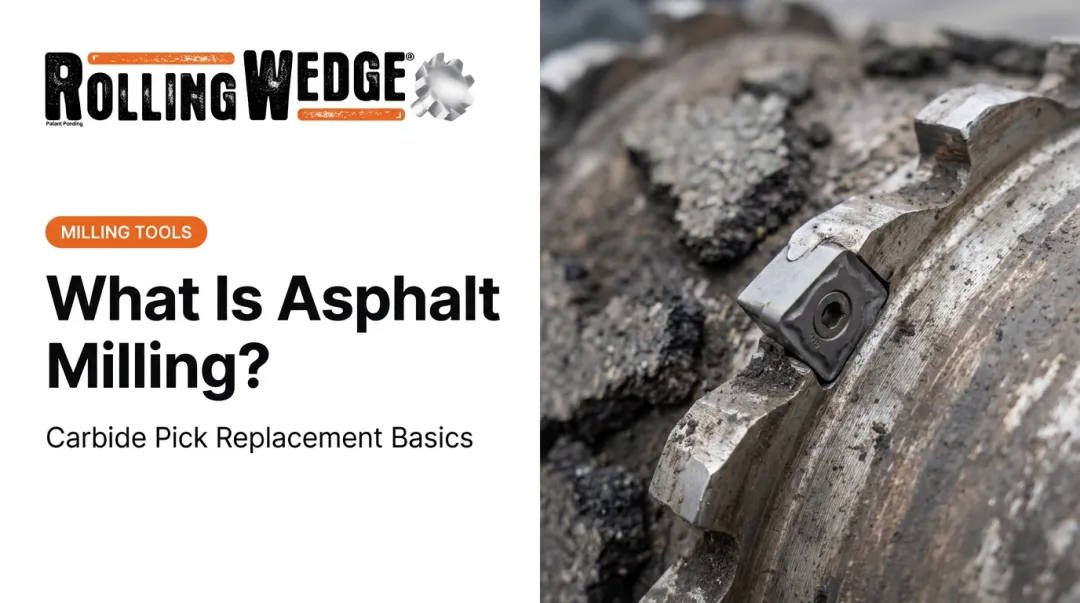
A milling drum removes pavement through a rotating cylinder fitted with tool holders, each carrying a cutting tool. Drum width, tooth spacing, and rotation direction all work together: change one, and you change how the whole system performs at the edge.
Drum Width and Cutting Pattern
Width determines how many passes a project needs and how close you can get to obstacles. Tooth spacing affects surface texture and material removal rate per pass.
Wirtgen's published spacing categories give a useful reference point:
| Drum Category | Tooth Spacing | Typical Use |
|---|---|---|
| Standard | 12–18 mm | Bulk material removal |
| Fine | 8–10 mm | Improved surface texture |
| Micro-fine | 3–6 mm | Closest, smoothest pattern |
(Source: Wirtgen milling drum specifications)
A drum configuration built for broad-area production (wide, aggressive spacing, high removal rate) often struggles at a narrow tie-in or an irregular shoulder. There's simply not enough control to follow a tight boundary without overcutting into pavement that should stay untouched.
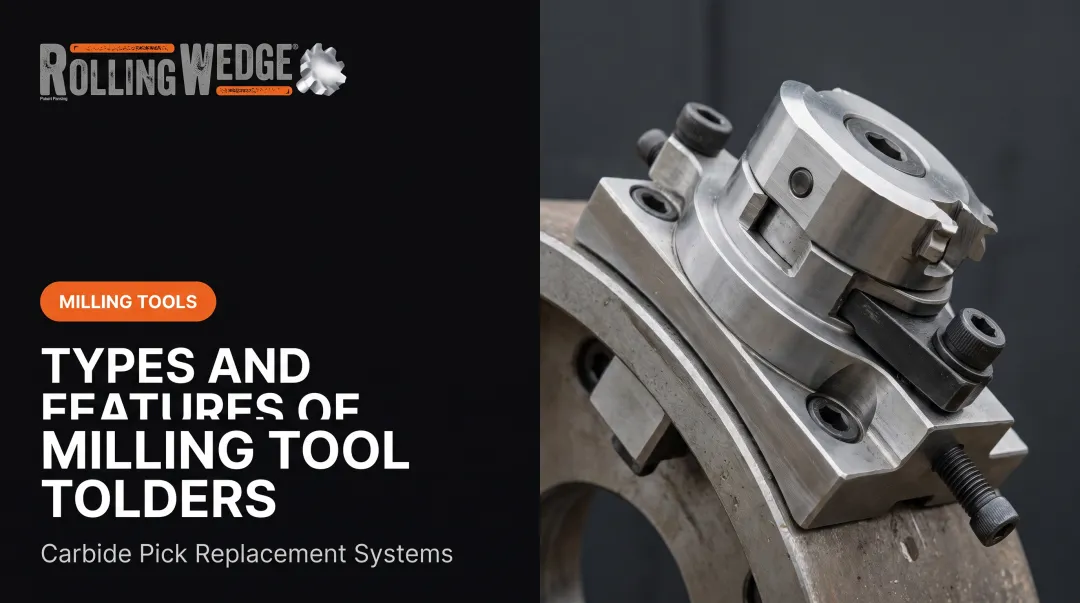
Tool Holders and Cutting Tools
Holder condition, tool retention, and cutting angle all influence cutting force, heat buildup, and how consistent the milled surface looks pass after pass. A worn holder lets a tool wobble, which shows up as chatter and an uneven cut.
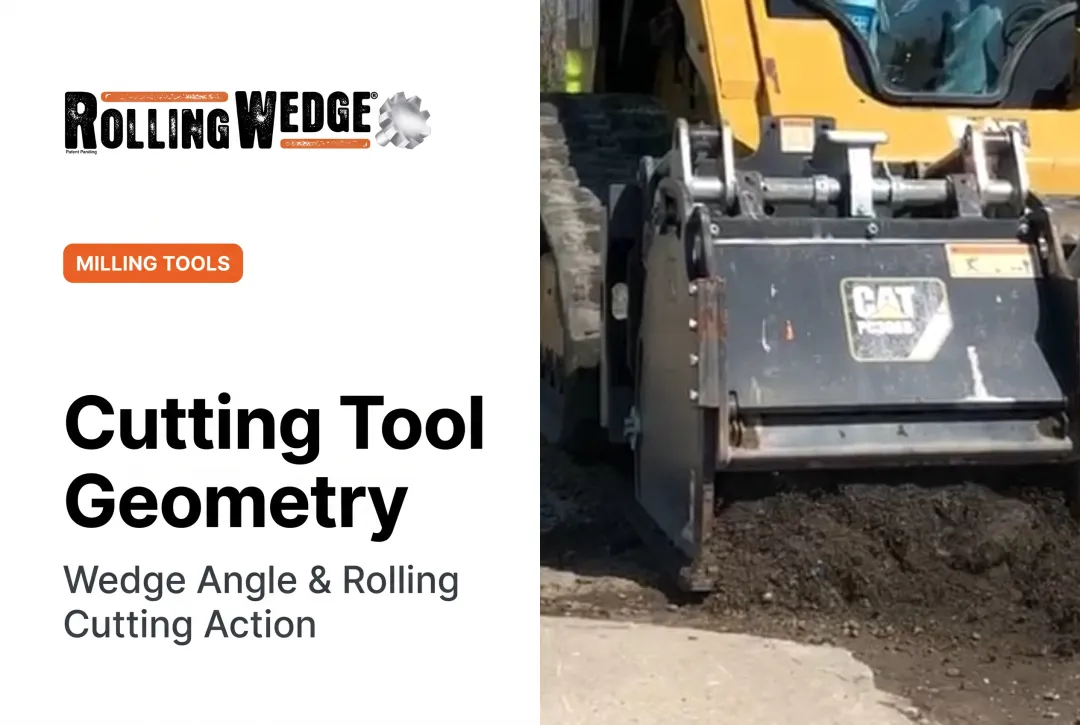
Conventional carbide picks cut by direct impact. The tip is forced into the material, generating friction and heat as it goes. Rolling Wedge Milling Tools take a different approach: they roll over and away from the pavement, putting it into tension instead of shattering it. Measurable tool life on your job still depends on the material, depth, and machine, not just the tool's design on paper.

Operational Benefits of a Properly Matched Configuration
Match the drum and tools correctly, and the payoff shows up in numbers you can actually track: edge straightness, pass rate, tool consumption, vibration levels, and machine uptime.
A clean, consistent edge simplifies paving alignment downstream. Crews don't have to compensate for a wandering boundary or fill gaps where the mill left an uneven line.
That said, final acceptance always comes down to the governing project specification. State DOT tolerances vary, and no configuration replaces checking the actual contract requirements.
Worth tracking on every comparable job:
- Tool life before replacement
- Time required per tool change
- Linear feet completed per shift
- Unplanned downtime
- Rework needed to correct the edge
Documenting these across jobs, not just trusting a spec sheet, is how you find out whether a configuration change actually pays off.
What to Consider When Choosing the Best Milling Drum and Tools
The right setup depends on pavement material, edge geometry, cut depth, machine type, job volume, and the condition of the surface you're cutting into. Before changing any configuration, check the milling machine manufacturer's operating guidance and the project specification. Both take precedence over general advice.
Surface Material and Mixed-Material Exposure
Asphalt density, age, distress level, and the possibility of hitting concrete or reinforcement all change how a tool performs. Wirtgen's own guidance positions carbide picks for nonhomogeneous asphalt or concrete, while designating PCD (polycrystalline diamond) tooling for more uniform asphalt without abrupt impact loads (Wirtgen cutting technology brochure).
If a job is likely to hit concrete transitions or embedded reinforcement, a tool built for mixed hard surfaces may reduce jamming and inconsistent passes. Confirm compatibility and safety limits for your specific machine before relying on that assumption.
Edge Geometry, Cut Depth, and Required Profile
The planned edge angle, milling depth, cut width, and joint location dictate drum width and tool spacing. A straight longitudinal tie-in gives you room to plan wide, even passes. A narrow patch boundary or irregular shoulder edge demands tighter control and often a narrower drum.
Florida DOT's current specification sets a profile tolerance of 1/4 inch and a matching 1/4-inch limit on joint variation between adjacent milled cuts (FDOT FY 2026-27 Standard Specifications, Section 327). Cross-slope limits are measured separately as a percentage. These numbers apply to FDOT contracts specifically. Always check the governing spec for your state before setting acceptance criteria.

Drum Width, Tooth Spacing, and Cutting Pattern
Wider drums with aggressive spacing remove more material per pass but sacrifice edge control. Tighter spacing gives a finer finish and better boundary accuracy at the cost of production speed.
Overloading a drum by pushing depth or speed beyond what the tool geometry supports contributes to vibration, uneven cutting, and faster tool wear. Evaluate whether your configuration holds the required edge without overcutting into adjacent pavement.
Tool Design, Retention, and Wear Behavior
Compare carbide picks against alternative designs on the same criteria every time:
- Cutting action and contact area
- Wear pattern over time
- Heat generation
- Stress placed on the holder
- Replacement frequency
- Installation time per tool
A 2025 MnDOT-sponsored study found that heavily worn teeth forced operators to slow machine advance to hit the same cut depth as new teeth. That slowdown is a direct production consequence of wear, not just a quality issue (MnDOT NRRA report). Use verified manufacturer data or documented field trials before accepting any tool-life claim at face value.
Uneven wear, loose holders, damaged tips, or inconsistent tool projection all warrant a stop-and-inspect before continuing production.
Machine Compatibility and Operating Conditions
Skidsteer-mounted planers and larger milling machines each have their own hydraulic capacity, drum speed, and depth-control limits. Caterpillar's PC310 attachment, for example, specifies 26–33 gpm optimal hydraulic flow, 3,300–4,000 psi pressure, and 155 rpm drum speed. Those figures are specific to that attachment, not a universal setting (Caterpillar PC310 specifications).
Pre-job checklist:
- Confirm drum installation and torque per the machine manual
- Check tool retention and projection for consistency across the drum
- Inspect guards and hydraulic connections for leaks or damage
- Verify depth controls match the project specification
- Confirm ground speed and water application settings before the first pass
Lifecycle Cost, Maintenance, and Downtime
Total cost includes purchase price, replacement frequency, installation labor, lost production during changeouts, disposal, machine wear, fuel, and any rework. Track cost per linear foot or per square yard, along with tool-change time and edge-quality results across comparable jobs.
Run a controlled field trial before switching configurations wholesale.
How Rolling Wedge Can Help
Rolling Wedge, LLC manufactures Milling Drums and Milling Tools in Peoria, Illinois, for asphalt, concrete, and other hard-surface applications. It does not make, sell, or rent Skidsteers, planer attachments, or milling machines, and it does not provide milling services. It sells direct to contractors, municipalities, Skidsteer operators, and large-scale milling equipment users.
The Rolling Wedge Milling Drum System uses a rolling-wedging-lifting cutting action instead of the direct-impact approach carbide picks rely on. The design targets asphalt’s low tensile strength (about 20% of its compressive strength) so the tool cuts with less resistance than a standard pick strike. For the edge itself, 8 carbide picks, 4 at each end of the outer cut edge, work in conjunction with the Milling Tools to leave a square edge and corners.

Edge-work benefits contractors compare most often:
- Reduced tool replacement frequency (the company cites 1–3 months versus roughly twice weekly for carbide picks)
- Faster changeouts (a full 24-inch drum reportedly swaps in about 20 minutes versus 1–2 hours for carbide picks)
- Lower vibration and reduced hydraulic stress from smoother, bounce-free operation
- The ability to mill asphalt and concrete — including some grades of rebar and wire mesh — without switching tools mid-pass
Figures are reported by Rolling Wedge; in asphalt milling, operating lives of 10x and longer than carbide picks have been reported. Replacement intervals and changeout times still vary by job.
Compatible platforms include:
- Skidsteer planer attachments: Bobcat, Caterpillar, Kubota, Bradco, Roadhog, Simex, Virnig
- Larger milling equipment: Caterpillar, Roadtec, Wirtgen
Rolling Wedge supplies the Milling Drum and Milling Tools installed on these attachments and machines, not the equipment itself. Brand names indicate compatibility only; Rolling Wedge is not affiliated with these equipment manufacturers. Always confirm model-specific fit and operating requirements before installation.
Weighing a drum or tool change? Run the numbers through the Milling Cost Comparison Tool to see whether the lifecycle math supports a switch, then contact Rolling Wedge to review your edge-milling application and request a Milling Drum or Milling Tools quote.
Conclusion
Successful edge milling comes down to matching the drum and tool system to the material you're cutting, the geometry of the edge, the required depth, and the machine doing the work. None of these decisions stand alone.
The lowest purchase price rarely equals the lowest operating cost. What a configuration costs over a project—sometimes over a single season—depends on:
- Tool life
- Installation time
- Downtime
- Machine wear
- Rework
Inspect your results. Track the data. When the evidence points to a better configuration or operating method, make the change, then verify it on your own job site before scaling it up. Qualifying customers can do that with the 20-day Rolling Wedge Milling Drum evaluation.
Frequently Asked Questions
What is edge milling in asphalt resurfacing?
Edge milling is the controlled removal of asphalt along a specific boundary (a joint, shoulder, patch perimeter, or tie-in) to create a clean transition for the resurfacing overlay. It differs from full-width milling by requiring tighter boundary control.
Why does milling drum design matter for asphalt edges?
Drum width and tooth spacing determine pass planning, edge access, and finish consistency. The wrong configuration causes vibration, uneven cuts, and difficulty meeting tight project tolerances.
How do carbide picks compare with alternative milling tools?
Carbide picks cut by direct impact, which builds friction heat and often forces replacement about twice a week. Rolling Wedge Milling Tools use a rolling-wedging-lifting action that runs cooler, needs replacement only every 1–3 months, and allows a full 24-inch drum changeout in about 20 minutes. Compare those figures against your own mix and depth.
Can one milling tool handle asphalt and concrete transitions?
Yes. Rolling Wedge Milling Tools mill asphalt, concrete, wire mesh, and some grades of rebar in one setup without mid-pass swaps. Confirm rebar grade limits and machine compatibility with the manufacturer before you lock the spec.
How do I choose the right milling drum for an edge-milling project?
Match drum choice to edge geometry, required depth, cut width, surface material, and machine type. Then check that setup against your production target and expected tool-change frequency before you commit.
How can contractors reduce tool replacement and milling downtime?
Match tools to the real material and edge geometry, inspect before every shift, and track wear against depth, speed, and drum setup. Use those field wear rates—not brochure claims—to plan changeouts and cut unplanned downtime.