Introduction
Ask ten contractors to define asphalt grinding, and you'll likely get ten different answers. Some mean abrasive surface correction. Others use it as a catch-all for milling.
That confusion isn't just semantic. Grinding and milling are often used interchangeably.
The cutting action, tooling, depth control, and resulting wear can differ significantly depending on the machine and drum configuration you're running.
The distinction matters for contractors, municipalities, and equipment operators. Cutting mechanics drive:
- Production rate and surface profile
- Tool replacement frequency and downtime
- Vibration, machine stress, and material recovery
The scale of the material involved isn't small, either. U.S. producers used an estimated 101.4 million tons of reclaimed asphalt pavement in hot- and warm-mix asphalt in 2024, according to the National Asphalt Pavement Association.
This article breaks down what actually happens at the cutting edge, how tool wear differs between approaches, and how to choose the right method for your next job.
Key Takeaways
- Grinding is broad asphalt reduction; milling is controlled drum removal at a set depth
- Impact-heavy cutting drives heat and edge wear; a matched wedging or shearing action lowers cutting force
- Choose milling for set depth, profile control, reclaimed material, or overlay prep
- Weigh pavement condition, depth, aggregate, machine, finish needs, and tool-downtime cost
Grinding Asphalt vs Milling Asphalt: Quick Comparison
Here's the side-by-side breakdown contractors and municipalities need before the detailed sections.
| Factor | Grinding | Milling |
|---|---|---|
| Cutting action | Abrasive rubbing, scraping, or impact; varies by equipment | Drum teeth penetrate, shear, and fracture pavement in a controlled pattern |
| Tool wear | Heat buildup, edge rounding, uneven wear on hard or contaminated material | Carbide tip abrasion, tooth fracture, holder wear, loosening from vibration or misalignment |
| Surface control | Less predictable profile; localized smoothing, not full-depth removal | Depth-controlled, consistent grade for overlay prep |
| Equipment | Smaller abrasive attachments or surface correction tools | Cold planers, Skidsteer attachments, large milling machines |
| Cost & downtime | Dust control, cleanup, and consumable wear often hidden in the quote | Productivity tied to depth and material; tooth changes drive downtime |
Why the Terminology Gets Blurred
Even federal pavement guidance doesn't draw a clean line here. Guidance that defines cold milling by its toothed rotating drum still describes that drum as a tool that "grinds" the existing pavement. In practice, ask what tool is doing the cutting and to what depth, rather than relying on the label alone.
Cutting Action Determines Everything Downstream
Tooth geometry, drum speed, and travel speed determine whether a cutter shears cleanly or hammers through material.
- Wedging or shearing, matched to the pavement, applies only the force needed to remove it
- Abrasive or impact-heavy cutting builds more heat and vibration before the material gives way
What Is Grinding Asphalt?
"Asphalt grinding" isn't one standardized process. It's an umbrella term that can mean anything from abrasive surface correction to informal shorthand for milling itself.
The Mechanisms Behind the Term
Depending on the equipment, grinding may involve:
- Abrasive rubbing that wears down a surface layer
- Scraping action for coatings or accumulated material
- Impact-based crushing on brittle or contaminated pavement
- Limited cutting that removes only a thin layer
Each mechanism applies a different force to both the pavement and the tool. Abrasive rubbing generates sustained friction and heat. Impact-heavy approaches load the tool edge repeatedly, which can round edges or fracture carbide faster than a controlled shearing action would.
How Grinding Affects Tool Wear
Heat generation, abrasive aggregate, and vibration are the main variables to watch. A tool forced through hard or contaminated material without the right geometry rounds off faster and wears unevenly. Actual wear always depends on the specific tooling and operating conditions, not on the word "grinding" itself.

Effects also show up beyond the tool:
- Inconsistent surface finish
- Extra hydraulic or drivetrain load
- More noise and vibration for the operator
- Repeated passes to hit a target profile
Use Cases of Grinding Asphalt
Grinding-style removal works best for:
- Light surface correction on a small area
- Removing coatings, paint, or accumulated material
- Profiling where exact depth isn't the primary requirement
It's a poor fit for:
- Deep pavement removal
- Large-area production milling
- Strict depth specs
- Highly abrasive aggregate
- Embedded metal or mixed asphalt-and-concrete surfaces
One clear example shows how limited true "grinding" is. When a job only needs to strip a high-friction surface treatment and leave the pavement underneath intact, FHWA recommends micromilling or diamond grinding, not full-depth milling. That's a specific, defined scope, not a general substitute for milling asphalt.
What Is Milling Asphalt?
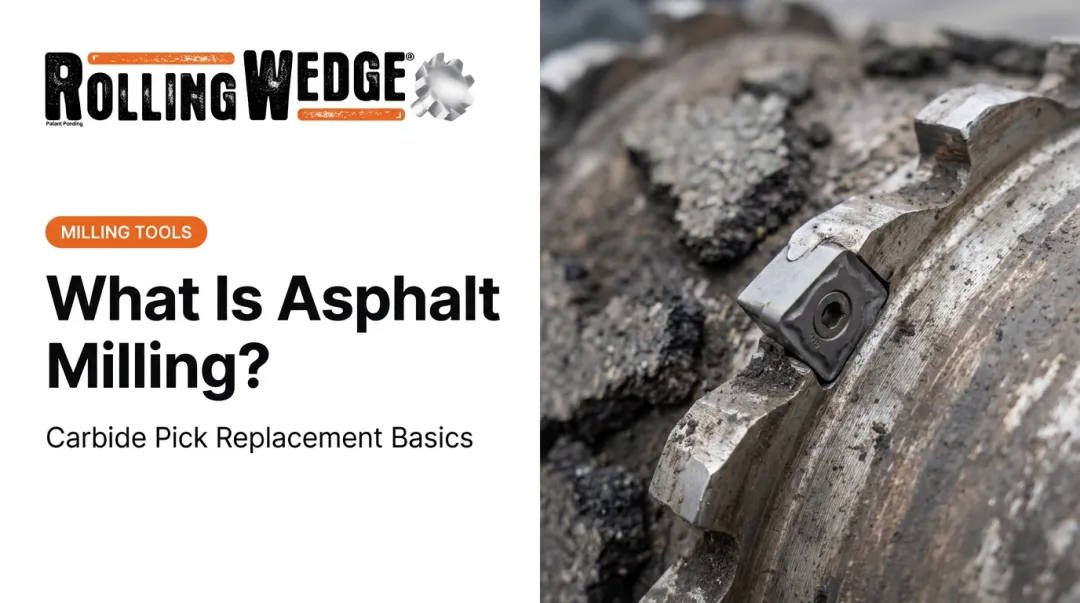
Asphalt milling, also called cold milling or cold planing, uses a rotating drum fitted with cutting tools to remove pavement in a planned layer while preserving the structure underneath.
The Milling Process, Step by Step
- Inspect the pavement and confirm structural condition before cutting
- Set depth and grade based on project specs and existing profile
- Select drum and tooth configuration matched to the material
- Mill in passes, adjusting travel speed to depth and aggregate
- Collect reclaimed asphalt pavement via conveyor or loader
- Sweep the surface and prepare it for overlay or another treatment
The Cutting Action, Mechanically Speaking
Each tool penetrates the pavement, applies concentrated force, and shears or fractures the material before lifting it clear. Tooth geometry, spacing, drum speed, and travel speed all interact to determine finish quality and how fast the tools wear.
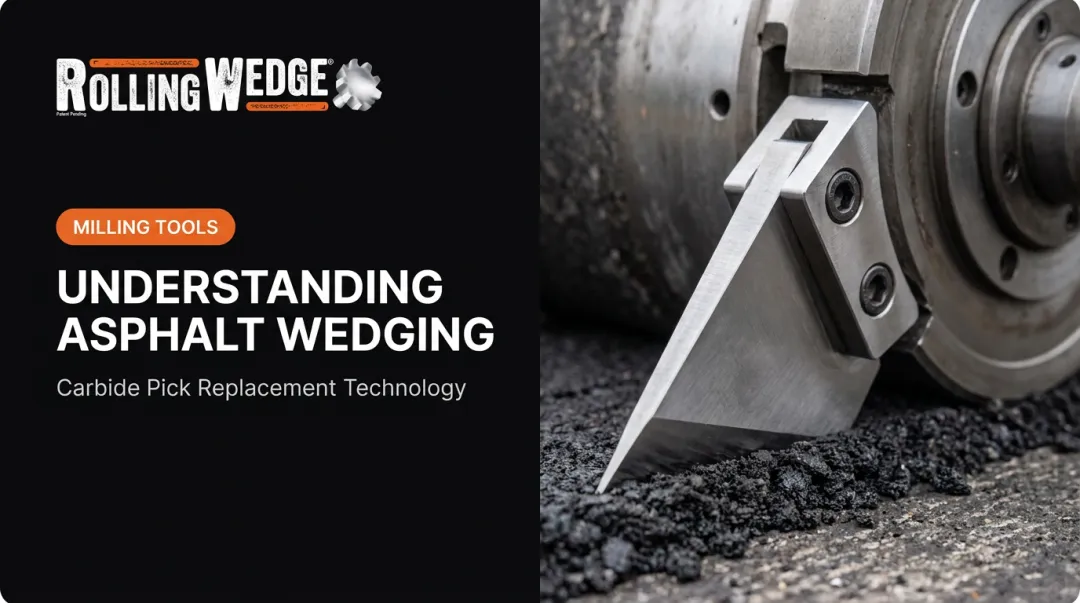
Rolling Wedge Milling Tools handle that cut differently. Instead of repeated impact, the carbide teeth rotate up and away from the material in a rolling-wedging-lifting motion, wedging cuttings loose rather than hammering through them. The design takes advantage of asphalt's low tensile strength, which runs roughly 20% of its compressive strength, so the material pulls apart more easily than it crushes. Without percussive hammering, the drum also moves forward with less bounce, which can reduce stress on the machine and the operator.

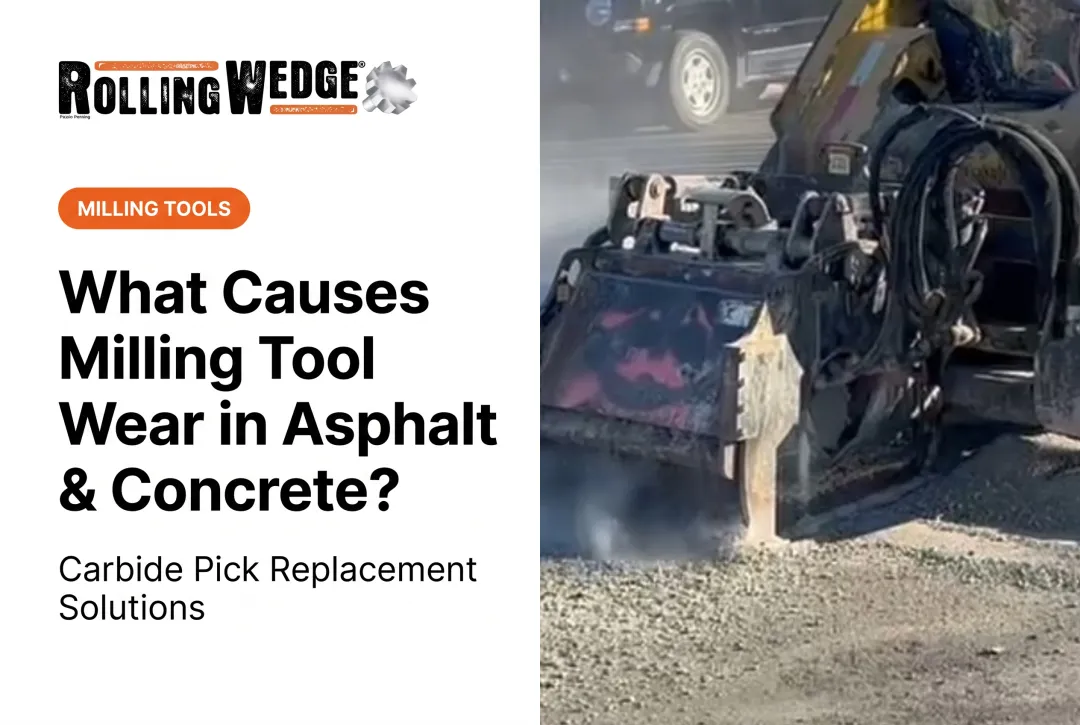
Common Milling-Tool Wear Modes
- Carbide abrasion from aggregate hardness and gradation
- Tip fracture under excessive impact or depth
- Holder damage from misalignment or contamination
- Tooth loosening caused by ongoing vibration
- Heat-related degradation when cooling or geometry falls short
Harder aggregate and finer gradation reduce milling productivity and increase tooth wear, so inspect picks under actual site conditions instead of relying on a generic replacement schedule.
Tool Wear Is an Operational Problem, Not Just a Parts Cost
Frequent tool changes don't just cost money on parts. They eat into tight traffic-control windows, add labor hours, and can produce an inconsistent milled surface if a broken tooth goes unnoticed. One or two broken carbide picks left in a drum can leave humps that telegraph straight into the finished overlay.
Rolling Wedge reframes wear around uptime, not just carbide cost. Rolling Wedge cites:
- Replacement every 1 to 3 months, versus twice-weekly carbide changes in comparable conditions
- Reported operating lives of 10x and longer than carbide picks in asphalt milling
- About 20 minutes for a full 24-inch drum changeout, versus 1 to 2 hours for carbide picks
Verify those intervals against your own pavement, aggregate, and depth before you build them into a bid.
Use Cases of Milling Asphalt
Milling covers a wide range of work:
- Removing distressed surface layers before an overlay
- Correcting ruts, uneven grades, or drainage elevations
- Removing pavement markings
- Recycling reclaimed asphalt pavement into new mix
Skidsteer attachments handle smaller jobs and tighter access, typically running 18- to 40-inch drum widths, while larger self-propelled cold planers handle high-production work. Matching hydraulic flow, drum width, and tooth arrangement to the job affects both production rate and wear.
Grinding vs Milling: What Is Better?
Neither method wins by default. The right choice depends on what the job prioritizes: thin surface correction, controlled depth removal, high-volume production, RAP recovery, low vibration, finish quality, or fewer tool changes.
Choose grinding when the equipment and cutting system are built for the material, depth, and finish you need—especially thin correction work.
Choose milling when the job needs repeatable pavement removal, overlay prep, or precise grade control across a larger area.
Decision Checklist
Check these factors before you commit:
- Pavement thickness and structural condition
- Aggregate abrasiveness, embedded metal, or rebar
- Mixed asphalt-and-concrete surfaces
- Project size and required production rate
- Machine and drum compatibility
- Traffic-control window length
- Expected tool-change downtime
Total Cost of Ownership, Not Just Tool Price
A cheaper tool upfront often costs more once you add the full operating burden:
- Labor for tool changes
- Lost production during changeouts
- Machine wear from vibration
- Cleanup time
- Redo passes on an inconsistent surface
Depth drives both production and wear. Wisconsin DOT contract-time estimates list 8,500 to 25,000 square yards per day for shallow milling under 2 inches, versus 8,000–20,000 square yards for cuts of 2 inches or more. Tool wear and changeout frequency move with that same depth variable.

Field Example: Tool Change Impact
A Minnesota-based contractor profiled by AsphaltPro switched from carbide picks to the Rolling Wedge Milling Drum System after frequent pick replacement and downtime cut into productivity. After the switch, the crew reported:
- Fewer tool changes
- Less downtime from broken picks
- A more consistent milled surface
Results still depend on pavement type, depth, and operating conditions—treat this as one data point, not a universal guarantee.
Compare Your Own Numbers
If you're comparing carbide picks with Rolling Wedge Milling Tools, run your site conditions, current replacement frequency, and machine specs through the Rolling Wedge Milling Cost Comparison Tool. It won't guarantee a result, but it will show where the math stands for your operation today. Rolling Wedge supplies the Milling Drum and Milling Tools for your existing Skidsteer planer attachment or milling machine; contact Rolling Wedge for a quote.
Conclusion
"Grinding" describes a broad range of surface-removal actions, some abrasive, some closer to milling in practice than in name. Milling generally delivers more controlled pavement removal, depth consistency, and reclaimed-material handling, which is why it dominates large-scale roadwork.
Cutting action and tool wear should be evaluated together, not separately. The most economical solution meets your required finish and production target while keeping tool changes, downtime, machine stress, and maintenance in check.
Before committing to a method or a tool, verify the choice against:
- Pavement composition
- Machine specifications
- Project depth
- Documented field performance
Judge the process by field results, not by the label on it. If tool changes are costing you production, ask Rolling Wedge about the 20-day Rolling Wedge Milling Drum evaluation for qualifying customers.
Frequently Asked Questions
Can asphalt be ground?
Yes, asphalt can be ground, but the right method depends on required depth, surface finish, equipment, and tooling. Many jobs described as "grinding" are more accurately called controlled milling.
How much does it cost to grind asphalt?
Cost depends on area, depth, pavement composition, equipment, labor, disposal or recycling, traffic control, and tool wear. Get a site-specific estimate rather than relying on a flat per-square-yard figure.
Will water drain through asphalt millings?
Drainage depends on gradation, compaction, fines content, slope, and subgrade, along with whether millings are used as a surface, base, or temporary material. Millings aren't an automatic substitute for a designed drainage system.
What is the difference between asphalt grinding and asphalt milling?
Grinding is a broad, informal term for surface removal, while milling refers to controlled removal with a toothed rotating drum at a specified depth. They differ in depth control, cutting action, surface profile, and tool wear.
Which causes more tool wear, grinding or milling?
Wear depends more on tool design, aggregate abrasiveness, impact load, depth, speed, and contamination than on the label alone. Watch for abrasion, heat, fracture, and loosening regardless of what the process is called.