Asphalt millings (also called reclaimed asphalt pavement, or RAP) are the crushed remains of old asphalt roads and parking lots, reused instead of landfilled. They're not new asphalt, and they're not gravel. They sit somewhere in between, offering a lower price tag with a few trade-offs worth understanding first.
This guide breaks down the real pros and cons, current cost ranges, how installation and hardening actually work, and what upkeep looks like over time.
Key Takeaways
- Asphalt millings driveways typically cost $2-$5 per square foot installed, well under new asphalt or concrete
- Properly compacted millings can last 20-30 years with routine maintenance
- Surfaces are drivable in 24-48 hours, far faster than fresh hot-mix asphalt
- Material quality varies by source, so ask suppliers about screening and milling equipment
- Drainage and compaction quality make or break long-term performance
What Are Asphalt Millings?
Asphalt millings start as an existing road or parking lot. A cold planer, sometimes called a milling machine, grinds off the top layer of that surface. Crews then crush and screen the removed material into consistent aggregate sizes. The recycled mix still carries residual asphalt, which helps it bind when compacted on driveways and other paving projects.
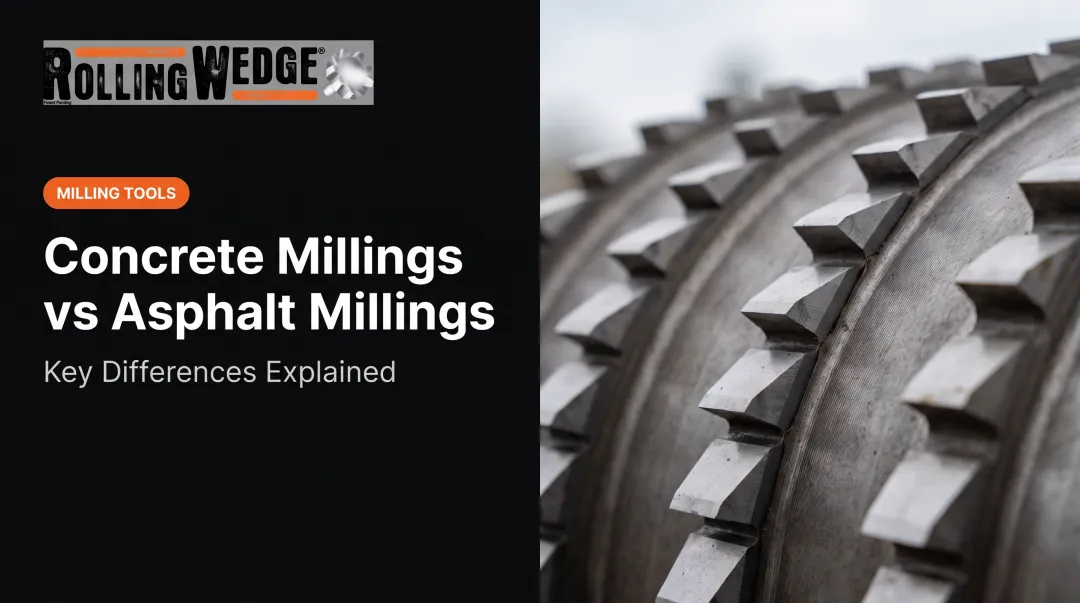
The quality of the finished product depends heavily on the equipment that produced it. Older carbide-pick machines cut through asphalt with repeated impact strikes, which can leave inconsistent chunks, grooves, and leftover debris in the milled material.
Newer systems shear or roll through pavement instead of chiseling it. Rolling Wedge Asphalt Milling cutting drums use that continuous rolling-wedging-lifting action, putting the pavement into tension rather than shattering it, which yields more uniform millings - useful when the material becomes a driveway surface or base.
Key distinction:
- Asphalt milling = the removal process (the machine grinding up old pavement)
- Asphalt millings = the resulting material, later reused for paving
Pros of an Asphalt Millings Driveway
Millings appeal to budget-conscious homeowners. Here's where the material actually delivers.
- Lower installed cost. Professionally installed millings typically run $2-$5 per square foot ($10-$20 per ton for material alone) versus $5-$12 for hot-mix asphalt and $6-$15 for concrete, per HomeGuide's 2025 cost data.
- Recycled content. Millings are 100% reclaimed from roads that would otherwise be demolished and dumped. In 2022, the industry returned 93% of recovered asphalt to new pavements, according to the National Asphalt Pavement Association.
- Long service life when compacted. Millings bond into a dense surface for regular vehicle traffic. With solid base prep and maintenance, contractors often report 20-30 years of use.
- Faster return to use. Compacted millings are often drivable in 24-48 hours, while fresh hot-mix usually needs 48-72 hours for light vehicles and keeps curing for months.
- Better drainage than solid asphalt. Unsealed millings have a porous structure that lets water pass through more readily, which reduces surface pooling in most conditions.
- Less upkeep than gravel. Once compacted, millings resist displacement better than loose gravel, which often needs fresh material every one to two years to hold depth.
Cons of an Asphalt Millings Driveway
None of this makes millings a perfect fit for every property. These drawbacks are worth weighing before you commit.
Inconsistent quality by source. Poorly milled or unscreened pavement can leave debris, vegetation, or oversized chunks. Ask what equipment produced the material—precision milling generally yields cleaner, more consistent output than older impact-style methods.
Potential contaminants. Trace petroleum residue or metals from old pavement can remain even after screening. Ask about the source roadway, and consider testing near gardens, wells, or play areas.
Rougher surface texture. Unsealed millings look and feel coarser than fresh asphalt or concrete—a potential dealbreaker if curb appeal matters most.
Limited regional availability. Supply hinges on nearby milling projects. Rural areas often face thinner stock and higher delivery costs—sometimes 50% or more once trucking is included.
Installation sensitivity. Skipping compaction or edge restraints invites rutting, spreading, or washouts. This isn’t a material to install casually.
Cost Comparison: Millings vs. Asphalt vs. Concrete
Here's how the three most common driveway surfaces stack up on price:
| Surface | Material Only | Professional Installation |
|---|---|---|
| Asphalt millings | $10-$20/ton | $2-$5/sq ft |
| New hot-mix asphalt | Varies by mix | $5-$13/sq ft |
| Concrete | Varies by mix | $6-$15/sq ft |
For coverage planning, one ton of millings typically covers:
- 96-120 sq ft at a 2-inch depth
- 64-80 sq ft at a 3-inch depth
- 48-60 sq ft at a 4-inch depth
Most residential driveways need at least 4 inches of millings.
DIY material-only pricing looks attractive on paper, but professional installation includes grading, base compaction, and drainage most homeowners can't match with rented equipment alone. Factor labor into your budget before you compare quotes—a low material price can hide a much higher finished-project cost.
Installation and How to Get Asphalt Millings to Harden
Getting a millings driveway right starts long before the material ever gets spread.
Site Preparation
Clear vegetation and debris, then grade and compact the subgrade so water sheds away from the house rather than pooling under the new surface. Skipping this step is the single biggest cause of long-term failures.
Layer Thickness and Compaction
Spread millings 3-4 inches thick for light vehicle traffic, or 5 inches or more for heavier loads like trucks or RVs. A plate compactor or roller then presses the material into a dense, interlocked surface through multiple passes.
A light water application during compaction controls dust and helps the aggregate settle evenly. Bonding comes from mechanical pressure that locks particles together with the residual binder still in the millings. Moisture aids densification but does not trigger a chemical cure.
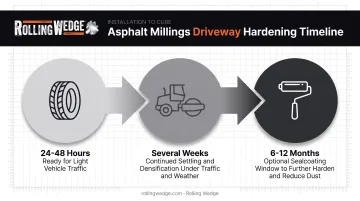
Timeline to expect:
- 24-48 hours — surface is compacted enough for light vehicle traffic
- Several weeks — continued settling and densification under regular use and weather exposure
- 6-12 months — optional sealcoating window to further harden the surface and cut dust
Maintenance Tips and Is It Right for You
A millings driveway isn't maintenance-free, but the work is manageable.
- Recompact periodically, especially after the first year, as the surface continues to settle
- Pull weeds early before roots establish in loose material along the edges
- Sealcoat every 3-5 years to control dust and refresh appearance
- Check drainage after heavy rain, watching for low spots or edge erosion
Millings suit homeowners who want a durable, budget-friendly, recycled surface and will trade a rougher texture for real savings. If curb appeal or a glass-smooth finish matters more than cost, new asphalt or concrete is the better fit.
Have a local paving contractor assess your soil, climate, and drainage before you commit material and money to the project.
Frequently Asked Questions
How do you get driveway millings to harden?
Mechanical compaction with a plate compactor or roller, combined with light moisture for dust control, locks the millings into a firm surface within 24-48 hours. Full densification continues over several weeks as traffic and weather settle the material further.
How long does an asphalt millings driveway last?
With proper installation and periodic maintenance, millings driveways commonly last 20-30 years. That's comparable to or better than a well-maintained gravel driveway, though typically less than new asphalt with full lifecycle care.
Is asphalt millings better than gravel for driveways?
Millings compact into a firmer, more stable surface than loose gravel, which needs fresh material added every one to two years just to maintain depth. That makes millings less labor-intensive to maintain over time.
Can I install asphalt millings myself?
Small repair patches are realistic DIY projects with rented compaction equipment. Full driveway installation requires proper grading, subgrade prep, and consistent compaction. Most homeowners are better off leaving that work to a professional.
Do asphalt millings driveways need sealcoating?
Sealcoating isn't mandatory, but it's recommended roughly 6-12 months after installation and every 3-5 years afterward. It reduces dust, improves appearance, and extends the surface's usable life.
How much do asphalt millings cost compared to new asphalt?
Millings run about $2-$5 per square foot installed, versus $5-$13 per square foot for new hot-mix asphalt. The exact savings depend on site prep, hauling distance, and material screening quality.