Seized teeth don't just cost the price of a replacement pick. They stall the whole operation: idle machine, idle crew, a paving train waiting behind a mill that isn't moving. Many contractors assume the fix is a better hammer or a stronger puller. Often the real problem started earlier — a holder that wasn't cleaned, a tooth that never fully seated, or debris packed into a bore that hasn't been inspected in weeks.
This guide breaks down why milling teeth seize, how to pick the right removal tool for the situation, and what a stuck pick actually costs once you count labor, idle equipment, and lost production. We'll also cover prevention and how changeout practices should shift based on what you're milling.
Key Takeaways
- Seizure usually comes from packed fines, corrosion, heat binding, or holder damage — not just normal wear
- Match your removal method to the seizure's severity instead of defaulting to a bigger hammer
- Downtime costs include labor, idle equipment, and schedule disruption, not just the tooth's price tag
- Routine cleaning, inspection, and compatible tooling prevent most repeat seizures
Why Do Milling Teeth Seize, and How Can You Diagnose the Problem?
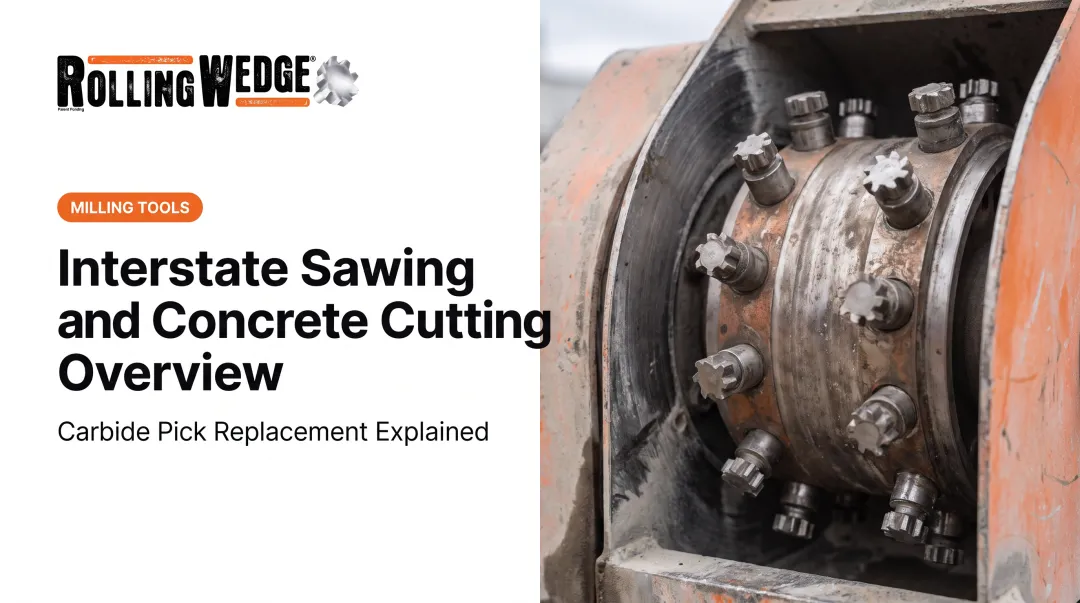
Before you touch a removal tool, figure out what's actually stuck. A pick that won't rotate isn't necessarily a pick that's seized in its bore; those are two different problems with two different fixes.
Common culprits behind a stuck tooth:
- Compacted asphalt or concrete fines packed into the holder, blocking free rotation
- Corrosion, especially on worn picks that have sat in wet or salted conditions
- Heat-related binding from extended cutting without adequate water flow
- Mushroomed or deformed shanks that no longer match the holder bore
- Damaged holders where the cutting angle has shifted from wear
- Teeth installed without fully seating, creating uneven load on the retaining system
Worn holders and packed fine powder can stop a pick from rotating even when it isn't truly jammed.
A working water system washes material out of the holder and keeps picks turning freely, according to For Construction Pros. Skip water for a shift or two, and routine swaps turn into a fight.
Warning Signs Before a Tooth Seizes
Watch for these before you're stuck on the shoulder with a dead mill:
- Visible tip flattening on one side (uneven wear pattern)
- A solid streak or white line appearing in the milled surface
- Unusual vibration coming from a specific drum position
- Material buildup visible around the holder base
- A tooth that no longer spins freely by hand
A Simple Decision Path
- Clean the area first. You can't diagnose a holder buried in fines.
- Confirm the retaining mechanism. Different machines use different systems — check the specific manual before forcing anything.
- Identify what's damaged. Is it the tooth, the holder, or both?
- Choose your approach. Light binding may need only a manual extractor; a mushroomed shank or corroded holder may need a powered tool or holder replacement.
None of those steps start until the machine is isolated and secured. Kubota's AP-CP30 manual is a clear example of the sequence:
- Shut off attachment power
- Lower the attachment onto solid ground or blocks
- Kill the engine and pull the key
Never work under hydraulically supported equipment. Every machine has its own lockout procedure—follow the one for your model.
Choosing the Right Milling Teeth Removal Tool
Not every stuck tooth calls for the same tool. Matching the removal method to the seizure type keeps you from turning a five-minute job into a holder repair.
Main removal tool categories:
| Tool Type | Best For | Watch Out For |
|---|---|---|
| Fork/drift + hammer | Standard changeouts, light binding | Striking the carbide tip can shatter it |
| Manual extractors/pullers | Moderate corrosion or packing | Slower on badly seized teeth |
| Air hammer with punch | High-volume crews, frequent changeouts | Picks can be hot; impact injury risk |
| Hydraulic removal tools | Severe seizure, large-drum machines | Requires proper access and training |
| Manufacturer service kits | Model-specific compatibility | Must match exact holder system |
Wirtgen's genuine-tool line, for example, separates hand ejectors, round-shank pick extractors, and hydraulic pick ejectors into distinct categories. The copper hammer in that lineup is meant for driving picks in, not knocking them out. Grabbing the wrong tool for the job is how holders get damaged.
Improvised methods carry real risk. A cold-planer maintenance guide notes that striking a hot carbide tip directly can shatter the carbide and send fragments flying, injuring whoever is holding the punch.
That same source lists an air hammer with a punch as an option for crews doing frequent changeouts. Use it as a controlled tool, not a stand-in for hitting the pick with a sledge (For Construction Pros).
A safer changeout sequence looks like this:
- Isolate and lock out the machine before any holder work
- Clean the holder area so the retaining system is fully visible
- Inspect the retaining system before you apply force
- Apply the manufacturer-approved removal tool for that holder type
- Remove the tooth without leveraging against the holder body
- Inspect mating surfaces for galling, cracks, or distortion
- Install the replacement and confirm full seating

If the holder shows distortion or the drum looks compromised after removal, stop and escalate before fitting a new tooth. A holder welded back incorrectly will seize the next tooth just as fast.
How Milling Tooth Changeouts Create Downtime and Hidden Cost
A stuck tooth's real cost rarely shows up on the parts invoice. It shows up in the hours nobody billed for.
What actually gets counted in total changeout cost:
- Replacement tooth or holder parts
- Technician and operator labor for the changeout itself
- Access and cleaning time before removal even starts
- Idle machine time while the crew works the drum
- Lost production — square footage not milled that shift
- Crew disruption if other tasks were staged around the mill running
- Schedule or haulage delays if paving crews are waiting downstream
Run your own numbers instead of a generic industry average:
- Multiply hourly equipment cost plus labor rate by average changeout time
- Multiply by how many teeth are affected per stop
- Add the production you lose while the mill sits idle
Your labor rates and machine costs differ from the next contractor's, so this framework beats any published average.
One documented case makes the stakes concrete. According to AsphaltPro, worn holders and misaligned teeth at Top Quality Paving contributed to a poor cut. The crew had to re-cut almost 2 miles of surface. That return trip added labor cost and would have required extra paving material if the profile had gone uncorrected. A seized or misaligned tooth can trigger rework, not only delay.
Planned versus reactive changeouts
Batch-replacing teeth on a schedule cuts repeated setup and access time. Stopping the mill for every single failure means paying cleaning and access costs over and over.
Purchase price alone is also an incomplete comparison between tool systems. Real cost includes tool life, replacement frequency, and installation time.
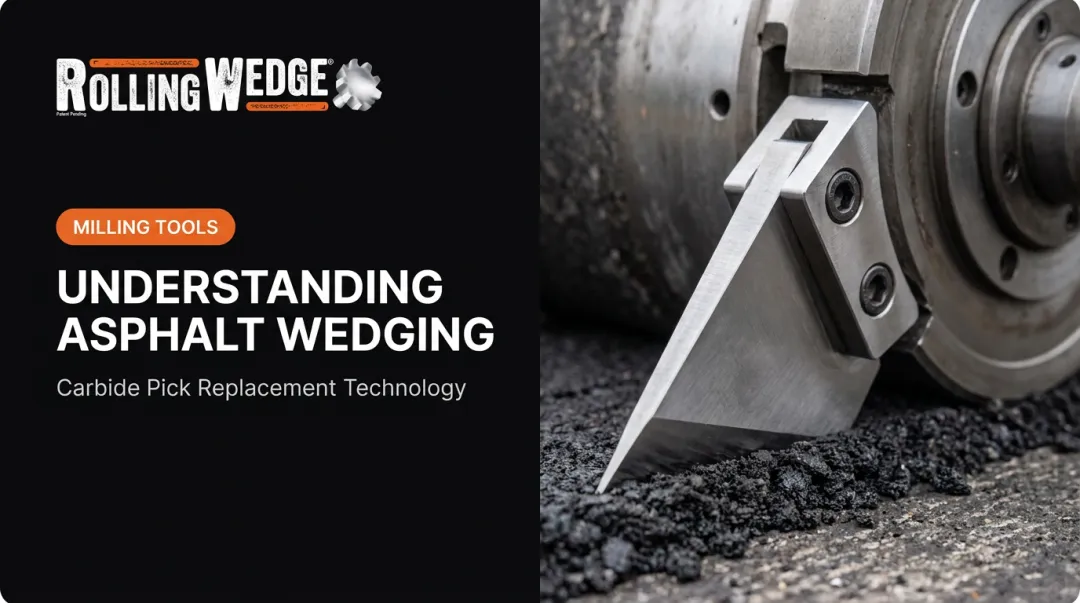
Rolling Wedge, which manufactures Milling Drums and Milling Tools as an alternative to conventional carbide picks, states its rolling-wedging-lifting Milling Tools typically compare as follows:
- Replacement interval: every 1 to 3 months, versus twice weekly for carbide picks
- Installation time: about 20 minutes for a full 24-inch drum, versus 1 to 2 hours for carbide picks
- Seizing: Rolling Wedge Milling Tools stay continuously rotating during operation and are designed not to seize, with no water needed to keep them rotating (water may still be used for dust control)
Each Rolling Wedge Milling Tool carries nine carbide teeth and stays usable with one or two missing; once three or more are gone, it's time to replace it. Rolling Wedge also recommends keeping wear even across the drum by rotating usable worn tools back in, rather than mixing a single new tool into a worn drum.

Operations that want to pressure-test those figures can run them through Rolling Wedge's cost comparison tool against their own equipment rates and changeout patterns. As with any manufacturer claim, verify performance against your field conditions before you switch; qualifying customers can do that with the 20-day Rolling Wedge Milling Drum evaluation.
How to Prevent Seized Milling Teeth and Repeated Emergency Changeouts
Most seizure problems trace back to something skipped during routine service, not a defect in the tooth itself.
Build a preventive inspection routine that covers:
- Tooth rotation: spin each one by hand during service
- Wear patterns and holder condition
- Retaining hardware and whether it's still intact
- Drum cleanliness, especially fines packed near the base of holders
- Unusual vibration reported by the operator
- Signs of material buildup before they progress to binding
Cleaning packed fines during scheduled service, rather than waiting for a field failure, is one of the cheapest prevention steps available.
A cutter drum representative for Wirtgen America identifies the drum and its milling teeth as the top milling-machine maintenance item. Poorly maintained drums increase vibration and accelerate wear across the machine, not just at the tooth (For Construction Pros).
Installation details matter more than most crews assume:
- Fully seat every tooth before returning to service
- Use the correct retaining hardware for that holder system
- Follow lubrication guidance specific to your machine
- Never substitute incompatible parts to finish a job faster
Even with solid install habits, seizures can still cluster. Treat repeats as data, not bad luck:
- Log failures by machine, drum position, material type, and job site conditions
- Flag the same drum position seizing across multiple projects as a holder problem
- Stock compatible teeth and approved removal tools so a changeout doesn't become a mid-shift parts run
Matching Changeout Practices to the Milling Application
What you're cutting changes how often you'll be back at the drum with an extractor in hand.
Material affects wear and packing differently:
- Asphalt generally produces less resistance and slower wear on picks
- Concrete accelerates carbide wear and increases debris packing risk
- Mixed asphalt-concrete surfaces often mean more unplanned changeouts as tools transition between materials
- Reinforced concrete adds rebar contact, which most standard carbide picks aren't built to handle repeatedly
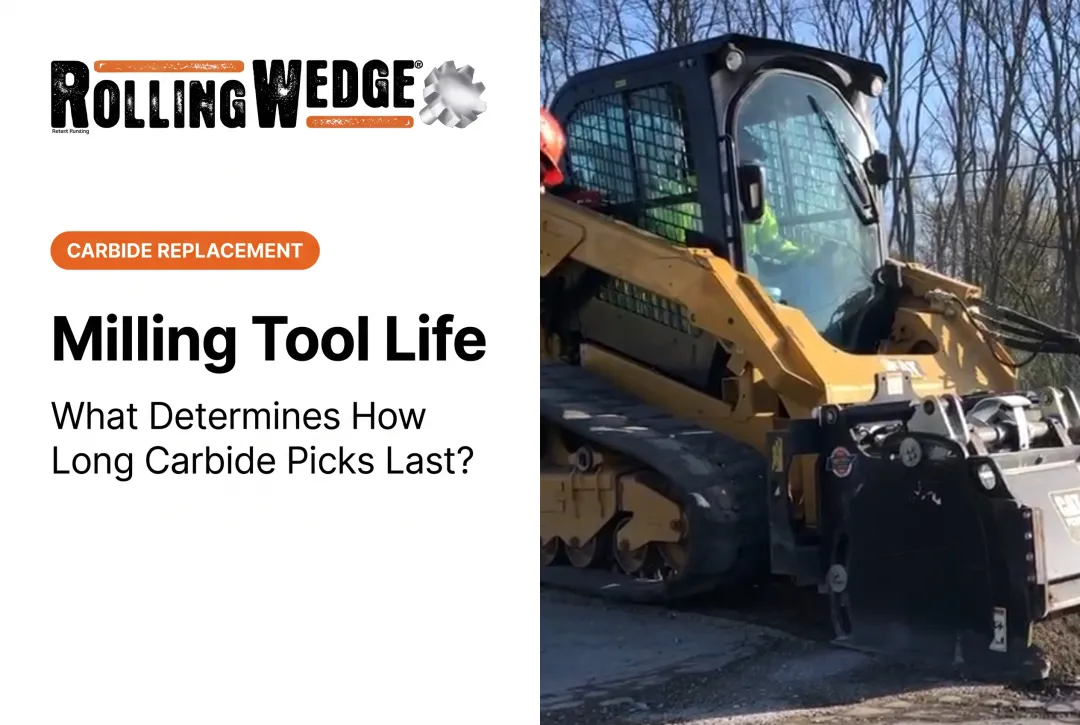
Machine size and configuration also shape your removal options. A Skidsteer-mounted planer attachment offers tighter access around the drum than a large cold planer. That tighter space limits how much force and what tool geometry you can realistically use in the field.
Confirm compatibility with your specific machine and drum manufacturer before ordering removal tools or replacement milling tools. Wirtgen, Caterpillar, and Roadtec each use different holder systems. Caterpillar's PM822, for example, uses a tapered dual-retention toolholder that needs no separate retaining pin or bolt. A tool built for one system won't necessarily fit another.
On mixed-material jobs, some contractors look at single-tool systems to reduce swaps. Rolling Wedge's system is designed for asphalt, concrete, and some grades of rebar without tool changes. Match that capability to your material mix and cut depth before committing a fleet to it.
Before selecting a tooth system or changeout strategy, compare:
- Cut depth required for the project
- Material composition, including any reinforcement
- Production targets for the job
- Service access at the site
If tooth changeouts keep costing you shifts, contact Rolling Wedge for a Milling Tools or Milling Drum quote for your Skidsteer planer attachment or milling machine. Rolling Wedge supplies the Milling Drum and Milling Tools, not the Skidsteer, attachment, or milling machine itself.
Frequently Asked Questions
How much do Wirtgen milling teeth cost?
Pricing for Wirtgen milling teeth varies by tooth type, size, holder system, machine model, supplier, and order quantity. Compare total cost of ownership, including changeout frequency and labor, rather than unit price alone.
What is the cutting tool used in milling?
Milling teeth, often called carbide picks, are the standard cutting tool for asphalt and concrete milling. Designs and materials vary depending on the machine and application.
What is the cutting tool mounted on in a milling machine?
The cutting tool sits in a holder or block attached to the milling drum. The holder and its retaining system determine both the fit and the removal procedure.
How do you remove a seized milling tooth?
Isolate and secure the machine, clean the area, and identify the retaining system before applying force. Use the manufacturer-approved extractor, and escalate to a technician if the holder or drum looks damaged.
How can you prevent milling teeth from seizing?
Regular cleaning, holder inspection, correct installation, and approved lubrication practices prevent most seizures. Track recurring failure locations and replace teeth on schedule rather than waiting for a field failure.
When should milling teeth be replaced instead of removed and reused?
Replace teeth showing wear, cracking, deformation, damaged retention features, or poor rotation. If a tooth won't seat correctly or exceeds manufacturer wear limits, reusing it risks cutting quality and safety.