A loaded skidsteer can weigh as much as a small pickup truck, and its skidsteer system (turning by varying speed between the left and right wheels) takes real coordination to master. This isn't intuitive for most new operators.
The stakes are real, too. A 2022 CDC-affiliated study found 312 skidsteer injuries reported to OSHA between 2015 and 2020, including 85 fatalities, with transportation incidents accounting for 44% of those deaths.
This guide walks through correct skidsteer operation from pre-checks to shutdown, covering the details that separate confident operators from accident statistics.
Key Takeaways
- Skidsteers excel in tight spaces and short hauls, not long-distance or highly technical grading work
- A pre-operation walkaround and proper safety restraints prevent most common operating mistakes
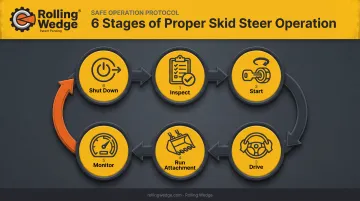
- The correct sequence is inspect, start, drive, run the attachment, monitor, shut down
- Loads should stay low and centered; never exceed rated operating capacity
- Matching the right attachment to the surface protects the machine and improves output quality
When and Where Should You Use a Skidsteer?
Skidsteers work best where space is tight and maneuverability matters more than raw output. Independent left- and right-side wheel control lets the machine pivot or counter-rotate within a footprint that larger equipment simply can't match, according to Bobcat's buyer's guide.
Ideal use cases include:
- Short-haul material movement around a job site
- Grading, backdragging, and site prep before finish work
- Demolition cleanup and debris removal in congested areas
- Snow removal, landscaping touch-ups, and light agricultural work
- Roadway and pavement rehabilitation work in confined spaces
Wheeled skidsteers handle paved surfaces well, including concrete, asphalt, and parking lots. Compact track loaders perform better on soft, muddy, or uneven ground, thanks to lower ground pressure and better flotation.
When a Skidsteer Is the Wrong Choice
Skidsteers aren't built for everything. Large-scale, long-distance hauling is better suited to dump trucks or wheel loaders. Highly technical finish grading typically calls for specialized graders or an experienced operator with a laser-guided system.
Skidsteers also shouldn't be pushed past their rated operating capacity. There's no universal rule for when to size up. Check the machine's manual and the load you're moving.
Beyond the Bucket: Specialized Attachments
The bucket is just the starting point. Interchangeable attachments can turn a skidsteer into:
- A forklift for pallet and material handling
- A trencher for utility and drainage work
- A milling setup for asphalt and concrete surface prep
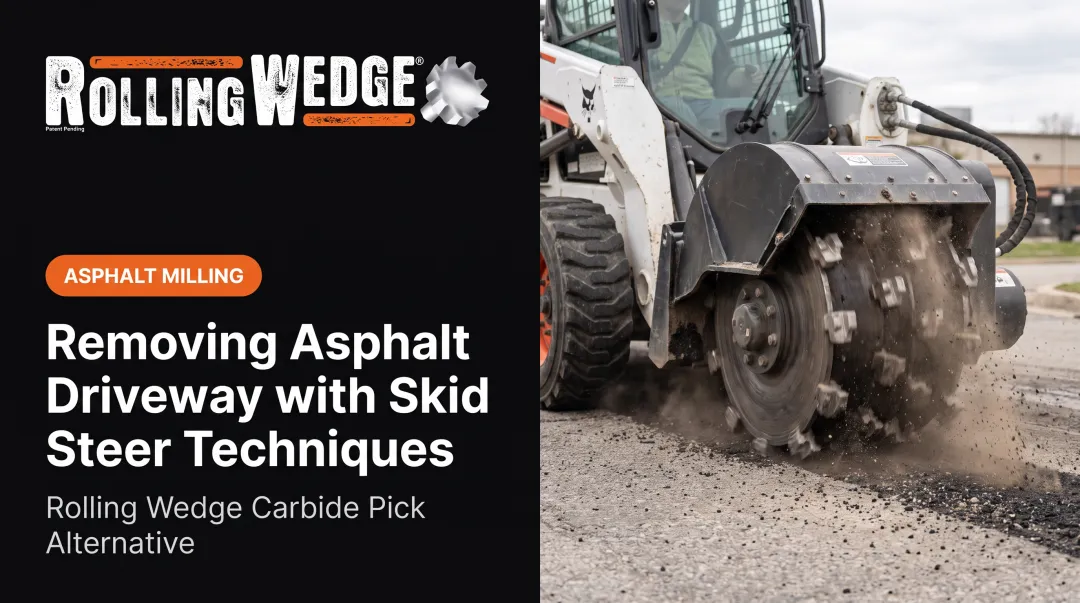
The Rolling Wedge Milling System for Skidsteer lets contractors and municipalities upgrade an existing skidsteer-mounted planer to mill asphalt and concrete, with carbide picks kept at the cut edges instead of doing all the work. Rolling Wedge Milling Tools are built for surface-level milling and prep - not full-depth roadway excavation - and can cut through rebar-reinforced concrete without swapping tools between materials.

What You Need Before Operating a Skidsteer
A safe operating session starts before the engine turns over. Confirm the site is clear and the machine is ready before you climb in.
Work area requirements:
- Stable, reasonably level ground clear of debris, ice, or mud
- No bystanders within the machine's working radius
- No overhead obstructions like power lines or low structures
Clearing the area first directly reduces rollover and collision risk. NIOSH data ties a large share of skidsteer fatalities to exactly these conditions.
Machine and Attachment Readiness
Every session should start with a walk-around inspection:
- Engine oil, hydraulic oil, and coolant levels
- Tire or track condition
- Hydraulic hose integrity
- Debris cleared from the radiator
John Deere's operator manual specifically calls out these checks before startup.
Running the wrong attachment for the job accelerates wear and creates unplanned downtime. Matching the tool to the task, whether that's a bucket, forks, or a milling attachment, matters as much as the inspection itself.
Skill and Supervision Level
Basic operator training or a manufacturer walkthrough is strongly recommended before anyone operates solo. Controls vary meaningfully between brands, so reviewing the specific machine's operator's manual isn't optional. OSHA requires employers to train operators to recognize and avoid unsafe conditions before independent use.
How to Operate a Skidsteer (Step-by-Step)
Correct operation follows a defined sequence: inspection, startup, driving, attachment use, monitoring, and shutdown. Skipping any one of these steps often leads to stalling, instability, or preventable damage.
Setup and Preparation
Start with a full walkaround:
- Check fluid levels
- Inspect tires or tracks for wear or damage
- Confirm the attachment is securely connected
Enter the cab using three points of contact: at least one hand and both feet (or both hands and one foot) stay on the machine at all times.
The most common setup error? Skipping the seatbelt or safety restraint bar. On most modern machines, this isn't just a safety recommendation; it physically locks out the hydraulics until it's engaged.
Starting the Machine
Once seated and buckled in with the restraint bar lowered:
- Neutralize the drive and auxiliary controls, then engage the parking brake
- Set the throttle to roughly one-third and turn the key to run, checking the panel for warnings
- Turn to start and release once the engine fires
- Let the engine warm briefly before applying any load (cold weather below freezing may require several minutes at slow idle, per manufacturer guidance)
- Press the hydraulic activation switch to unlock hydraulic function
You'll know startup went correctly if there are no warning lights or fault codes, the idle is smooth, and the hydraulics respond once unlocked.
Driving and Maneuvering
Drive controls, whether joystick or lever-based, move the machine by varying wheel speed independently on each side:
- Push both controls forward to go forward
- Pull both back to reverse
- Push one while pulling the other to turn
Start slow. Begin at lower throttle and accelerate gradually rather than jumping to full speed. Slow down further on slopes or uneven terrain; cross-slope travel is a common cause of rollover incidents.
Operating the Bucket or Attachment
Lift-arm and attachment controls scoop, carry, and dump material. Keep loads low while traveling. Never transport a loaded bucket at full height, since raising the load reduces the machine's stability.
Smooth, controlled inputs keep cuts clean and loads stable. Jerky joystick or lever movements cause spillage, stalling, or bucket bounce that ruins grading precision. The right attachment helps too: purpose-built tools track their intended surface more predictably than generic ones forced into the wrong job.
Monitoring During Use
While operating, split your attention between the instrument panel and your surroundings.
On the panel, watch for:
- Hydraulic temperature
- Fuel level
- Coolant temperature
Around the machine, watch for:
- Changing terrain or unstable ground
- Bystanders entering the work zone
- Blind spots, especially behind and to the sides
Bouncing, stalling, or straining hydraulics are all signs to slow down or adjust your approach rather than pushing through.
Shutting Down Properly
Shutdown follows its own sequence:
- Fully lower the attachment to the ground (never leave it raised without boom locks)
- Return throttle to idle
- Engage the parking brake
- Turn off the engine and remove the key
- Release the seatbelt and exit using three points of contact
Skipping the "lower fully" step isn't a minor shortcut. It puts unnecessary stress on the hydraulic system and can leave the machine unstable the moment you exit the cab.
Best Practices for Operating a Skidsteer Effectively
Good habits compound over time, both for safety and for the machine's lifespan.
Build these into every session:
- Perform a walkaround inspection before every use, not just occasionally
- Follow the manufacturer's maintenance schedule to catch small issues early
- Adjust speed and load height for slopes, wet ground, or confined spaces
- Keep loads low and centered; avoid sudden turns
- Never work beneath a raised bucket or attachment
- Turn off the engine before leaving the cab, even for short breaks
Rated operating capacity isn't a suggestion. Industry guidance notes that a skidsteer's rated operating capacity is traditionally set at 50% of its tipping load, and attachment weight counts toward that limit, not just the material inside the bucket.
Capacity discipline only goes so far if the tool on the machine is a poor match for the job. Attachment selection deserves the same attention as driving technique—the wrong tool accelerates wear and adds downtime a better match would have avoided.
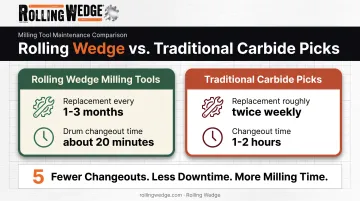
For contractors milling asphalt or concrete with a skidsteer-mounted planer, the cutting tools matter. Rolling Wedge's rolling-wedging-lifting tools typically need replacement every 1 to 3 months, versus roughly twice weekly for traditional carbide picks. A full drum changeout takes about 20 minutes instead of 1 to 2 hours, and for crews swapping tools often, that difference adds up fast. The rolling cut also runs with less bounce, giving operators more control with less fatigue.
Conclusion
Safe skidsteer operation comes down to the same sequence every time: inspect, start, drive, monitor, shut down. Skip a step and you risk instability, damage, or worse.
Treat proper operation and smart attachment choices as an investment. Both protect the operator today and extend the equipment's lifespan for years.
Frequently Asked Questions
Can beginners operate a skidsteer safely?
Yes. Beginners can operate a skidsteer safely after basic instruction and practice in an open area, following proper safety procedures and starting at low throttle. Supervision during those first sessions makes a real difference.
How long does it take to learn to operate a skidsteer?
Most beginners grasp basic controls within a few hours of practice. Smoother, more confident handling, especially with attachments, develops with continued use over days and weeks.
What is the difference between ISO and H-pattern controls?
ISO controls use the left joystick for driving and the right for the attachment. H-pattern controls split driving and attachment functions between both hand levers and foot pedals instead.
What is the most common mistake new skidsteer operators make?
Driving too fast, carrying loads too high, and skipping the pre-operation walkaround are the most frequent errors. All three are avoidable with a consistent routine before and during operation.
Do I need certification to operate a skidsteer?
Formal certification requirements vary by employer and jurisdiction. Hands-on training and reviewing the operator's manual are strongly recommended even for short-term rental use.
Can a skidsteer use different attachments for different jobs?
Yes. Most skidsteers support a wide range of interchangeable attachments, from buckets and forks to specialized tools like milling drums, letting one machine handle many different tasks.